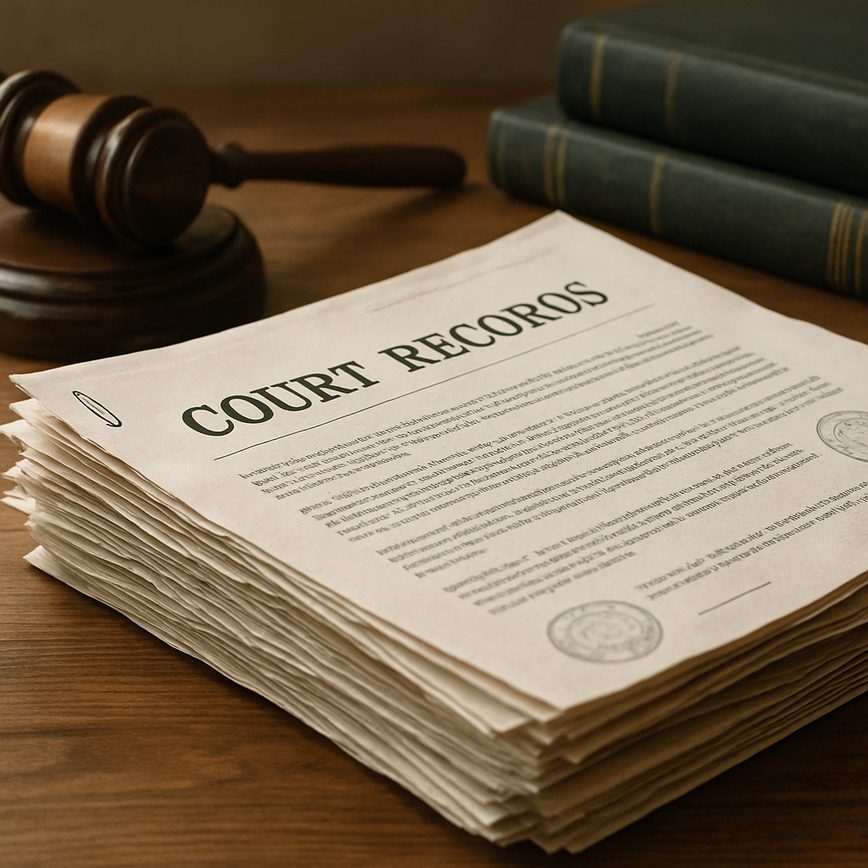
Understanding Court Records
Court records are official documents that detail the proceedings and decisions made within the judicial system. As a subset of public records, these legal documents are maintained by courts to provide a transparent account of cases and rulings. They serve as an essential resource for retrieving case information, which can range from criminal trials to civil disputes.
There are various types of court records available depending on the nature of the case and the judicial authority. Some common types include pleadings, motions, orders, judgments, and transcripts of court hearings. Pleadings consist of initial complaints and responses, while motions are formal requests for the court to make a decision on a particular issue. Orders and judgments represent the court’s rulings, and transcripts offer a detailed written record of what was said during proceedings.
People search court records for multiple reasons. Legal professionals use these documents to prepare for cases by reviewing previous court actions and decisions. Researchers and journalists often seek case information to gather facts and track legal trends. Additionally, individuals may access court records to check the status of their cases or to perform background checks on others. Because court records are part of public records, they play a vital role in ensuring accountability and providing public access to the workings of the justice system.
In summary, understanding court records involves recognizing their role as public legal documents that hold detailed case information. From civil to criminal matters, these records help various users stay informed and uphold transparency within the legal framework.
Types of Court Records
Court records encompass a variety of documents related to different types of legal cases. These include criminal records, civil records, and family law cases, each serving distinct purposes and containing specific information. Criminal records document the details of offenses and prosecutions, including arrest records, indictments, trial proceedings, and sentencing outcomes. These records are crucial for background checks and legal references.
Civil records cover non-criminal disputes between individuals or organizations, such as contract disagreements, personal injury claims, and property disputes. Civil case files typically include pleadings, motions, judgments, and other court documents that track the progress and resolution of the case. These records provide valuable insights into the legal actions and decisions made concerning private rights and obligations.
Family law court records deal with matters such as divorce, child custody, adoption, and guardianship. These documents often contain sensitive information and encompass filings, orders, and agreements that reflect the court’s decisions in family-related matters. Access to these records may be restricted to protect the privacy of the individuals involved.
Overall, court documents serve as essential evidence of judicial processes, preserving the legal history of criminal, civil, and family law cases. Whether researching case files or verifying legal outcomes, understanding the types of court records is vital for navigating the judicial system efficiently.
Legal Accessibility and Privacy
Access to court records is governed by a complex framework of legal regulations designed to balance the public’s right to know with individuals’ privacy rights. Public access to court records generally means that most court documents are available to anyone interested, supporting transparency in the judicial system. However, this access is not absolute and is subject to various restrictions grounded in privacy laws.
Privacy laws impose limits on the type of information that can be disclosed in court records to protect sensitive personal data. Certain records may be sealed or partially redacted to safeguard confidential information such as social security numbers, financial details, or information related to minors. These restrictions ensure that while the public can access essential case information, private details that could harm individuals if disclosed are kept secure.
Who can access court records often depends on the jurisdiction and the nature of the case. In most instances, anyone can request access to public court records without special permission. However, some records may be restricted to particular parties, such as involved litigants, their attorneys, or law enforcement, especially when the case involves sensitive matters or ongoing investigations.
It is crucial for users seeking court record access to understand these legal boundaries. While public access provides important oversight and transparency, respecting privacy limitations protects personal rights and complies with legal requirements. Awareness of these restrictions helps ensure responsible and lawful use of court records.
How to Search Court Records Online
Searching court records online has become increasingly accessible with the advent of official court databases and public records search portals. Whether you are looking for criminal, civil, family, or traffic case information, several reliable online resources can help you perform a thorough search court records process.
The first step in an online court records search is to identify the appropriate official portal. Most courts, whether state, county, or federal, provide dedicated websites where you can search court records by case number, party name, or other identifiers. These portals are typically free or may charge a small fee for detailed reports. Visiting the official court website ensures you are accessing accurate and up-to-date information directly from the source.
Once on the court’s online database, look for the “Records Search” or “Case Lookup” section. You will often need to enter specific details such as the full name of the person involved, case number, or filing date. It is essential to enter accurate information to streamline your search and retrieve the correct public records. Some courts also allow you to refine your search by selecting the type of case and date range, helping narrow down the results.
If you are unsure of the exact court where the case was filed, consider using statewide or national court databases. These resources aggregate records from various local courts, making it easier to perform a broader public records search. These larger databases can sometimes have more advanced search filters and access to a wider range of case types.
After locating the right case in the court database, you can usually view the docket, case details, and sometimes even downloadable documents such as court orders, motions, and judgments. Keep in mind that the availability of documents varies by jurisdiction and the sensitivity of the case. Always respect privacy laws and use the information gathered responsibly.
In summary, to search court records online effectively, start with the official court websites and utilize their dedicated court databases. Use accurate identifying information and explore statewide or national databases if needed. This method ensures a thorough and reliable public records search from trusted sources, making it easier to find the court information you need efficiently.
Using State and Local Court Websites
State and local court websites are essential resources for accessing court records quickly and efficiently. To begin your search, identify the specific state or local court that handled the case you’re interested in. Most states provide centralized court websites that serve as public access portals, allowing users to search court records by case number, party name, or other relevant criteria. These state court records systems are typically user-friendly and provide a comprehensive database of civil, criminal, family, and traffic cases.
Local court search tools operate similarly, but focus on records maintained by county or municipal courts. Many local courts offer online portals where you can perform detailed searches, view case summaries, docket entries, and sometimes even full case documents. These court websites often include step-by-step guides on how to access records, fees for document copies, and contact information if you need further assistance.
When using court websites, it’s important to have accurate information such as the full names of parties involved or docket numbers. Some states require users to create an account to access certain records, while others offer free public access. By utilizing these public access portals, you can access reliable and official court records maintained by state and local jurisdictions without needing to visit the courthouse in person.
Third-Party Court Record Services
Third-party search services provide an accessible way to obtain court records without navigating the often complex official judicial systems. These court record services aggregate data from various sources, allowing users to perform comprehensive searches online with ease. Many of these services specialize in online background checks, bringing together information not only about court cases but also related legal and personal history. This can be particularly useful for employers, landlords, or individuals seeking detailed information quickly.
When selecting a third-party service, it is crucial to choose providers that are reliable and transparent about their data sources. Pay attention to reviews and ratings to ensure the service offers accurate and up-to-date information. Many trustworthy services operate on a paid database model, charging fees for detailed reports. While free services exist, they often provide limited or outdated information, so paid databases often represent a better value.
Always verify that the service complies with legal standards, particularly regarding privacy and use of data for background checks. Reliable providers will clearly explain how their data is compiled and offer customer support to resolve any disputes or questions. Utilizing a reputable third-party search service can save time and effort while ensuring the court record information you receive is comprehensive and dependable.
Tips for Efficient Court Records Search
To enhance your court record research and make the search process more efficient, it’s essential to apply practical search tips and proven court record tricks. Whether you’re a legal professional or a curious individual, these actionable tips will improve both the accuracy and speed of your court records search.
Firstly, always start with precise information. The more specific details you have—such as full names, case numbers, or exact dates—the quicker you can zero in on the correct records. Avoid using partial or vague data, as it often yields overwhelming results and decreases efficiency.
Secondly, leverage filtering options available in most online court record databases. Applying filters, like date ranges, case types, or court locations, narrows down the results and saves you time. This focused approach is one of the most effective court record tricks to speed up your research without compromising on accuracy.
Another valuable tip is to understand and utilize the proper search operators if the database supports them. Using quotation marks for exact phrase searches or Boolean operators (AND, OR, NOT) can significantly refine your queries, making your court record research more efficient and targeted.
It’s also recommended to maintain a systematic approach. Keep a detailed log of your searches, including the keywords and filters used, to avoid duplication and to track progress. This method improves efficiency by helping you identify which strategies worked best for particular types of searches.
Additionally, don’t overlook the value of cross-referencing your findings with alternative sources. Court records sometimes have discrepancies or missing information, so verifying data with multiple sources can improve the accuracy of your research and uncover hidden details.
Finally, regularly update yourself on the new tools and features offered by court record databases. Many platforms continuously optimize their search functionalities, and utilizing these updates can provide you with new court record tricks to enhance your efficient search techniques.
Required Information to Have Ready
When preparing to search court records, having the correct search criteria on hand is essential for a successful and efficient process. The primary identifiers typically include full names of the parties involved in the case. This helps narrow down the results quickly, especially in jurisdictions with many cases.
Case numbers are another critical piece of information to have ready. When available, case numbers act as unique identifiers that directly point to the specific record, eliminating the guesswork and reducing search time. These numbers are particularly useful for retrieving documents related to ongoing or well-documented cases.
In addition to names and case numbers, the date of birth is an important identifier, especially when searching for court records involving individuals with common names. Including the date of birth in your search criteria helps ensure the records you retrieve correspond to the correct person.
By gathering these key identifiers—search criteria like full names, case numbers, and date of birth—you increase the likelihood of a successful record search. Having this information ready before you begin saves time and increases the accuracy of your search results, making the process smoother and more productive.
Avoiding Common Search Mistakes
When conducting a court records search, many people fall victim to common mistakes that can lead to frustration and missed information. One frequent error is entering inaccurate or incomplete personal details, such as misspelled names or incorrect dates. Search errors of this nature often result in no records found, even when relevant files exist. To avoid this, double-check all input information, and consider using variations or alternative spellings if initial searches fail.
Another challenge in record lookup is relying solely on a single database or court system. Court records may be split across different jurisdictions or levels of courts, so broadening your search scope can yield better results. Make sure to understand which courts hold the records relevant to your query before starting to minimize gaps in your search.
Failure to use advanced search features and filters can also hamper your efforts. Many court record portals have options to narrow down results by case type, date range, or parties involved. Utilizing these court records search tips can save time and improve accuracy.
Lastly, neglecting to check for updates or recent filings may cause you to overlook important developments. Court records are continually updated, so if your search initially shows no results, try revisiting after some time. Being aware of these common mistakes and approaches will enhance your ability to successfully navigate the complexities of court records searches.

I have lived within the jurisdiction of the 18th Judicial District for over twenty years and developed a keen interest in how local court rulings shape our community’s safety and standards. My focus is on tracking case proceedings and administrative updates to help neighbors better understand the judicial process that affects their daily lives. I believe that accessible information is key to fostering trust and engagement with the local legal system.